
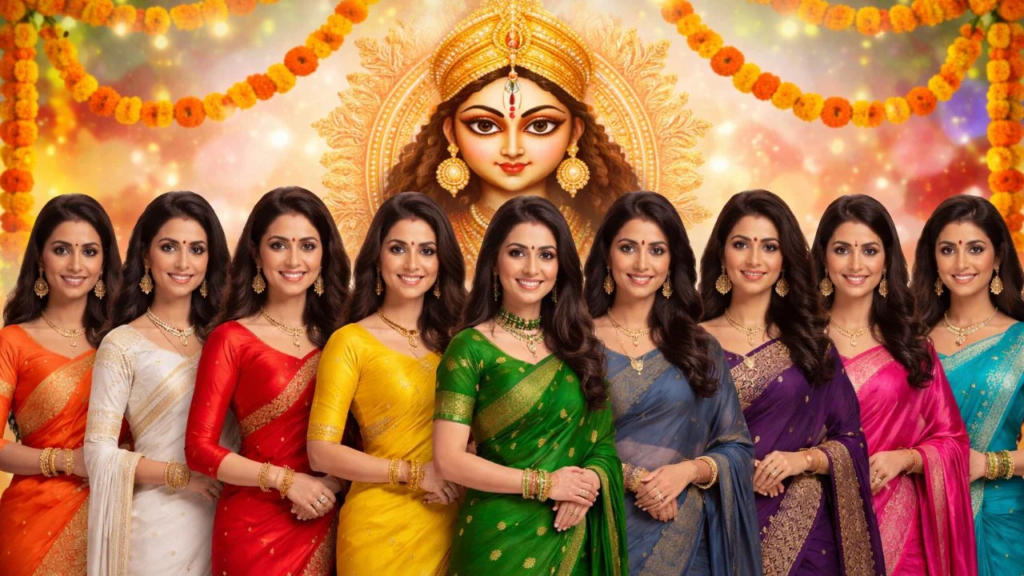
Navratri brings an energy that’s hard to find at any other time of year. For nine nights, neighborhoods light up, garba tracks play on repeat, and everyone gets caught up in the rhythm of the festival. Navratri Dedicated to the nine forms of Maa Durga (Navadurga), the festival is equal parts spiritual devotion, late-night dancing, and pure cultural joy.
One of the best parts of Navratri is the daily color ritual. Wearing a specific shade each day adds a fun, community-wide momentum to the week—you step outside and see your neighbors, friends, and coworkers all leaning into the same palette.
Here is how the daily colors Navratri break down, along with simple ways to style them without needing nine brand-new outfits.
The 9 Days, 9 Colors: Navratri Meaning & Style
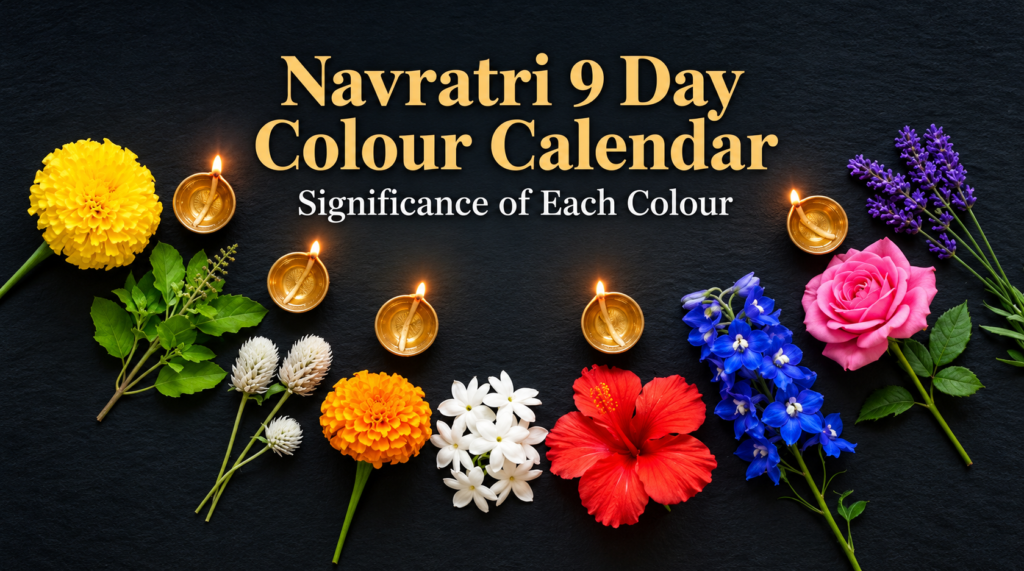
Day 1: Yellow (Happiness & Warmth)
Associated with the first form, Navratri Goddess Shailaputri, yellow marks a bright, welcoming start to the festival.
- Style it: A simple yellow cotton kurta or a lightweight saree works great for morning puja. Pair it with fresh marigolds in your hair or basic silver jewelry.
Day 2: Green (Growth & Harmony)
Dedicated to Goddess Brahmacharini, green represents fresh starts, nature, and peace.
- Style it: From deep emerald to soft mint, green is incredibly forgiving. Navratri Try a leafy-green dupatta over a plain white base outfit if you want to keep things easy.
Day 3: Grey (Balance & Stability)
Honoring Goddess Chandraghanta, grey brings a subtle, grounded tone to the lineup.
- Style it: Grey might sound plain for a festival, but it acts as a stunning canvas for oxidized silver jewelry, heavy embroidery, or a bright red lip.
Day 4: Orange (Energy & Enthusiasm)
Connected with Goddess Kushmanda, orange is pure, unfiltered festive energy.
- Style it: Perfect for an evening of garba. Look for traditional mirror-work chaniya cholis, Bandhani prints, or a bright orange kurta that stands out under the venue lights.
Day 5: White (Purity & Peace)
Dedicated to Goddess Skandamata, white brings a moment of quiet grace halfway through the week.
- Style it: An all-white Anarkali or chikankari kurta set feels timeless. If you want a bit of color, throw on a bright silk or printed dupatta.
Day 6: Red (Strength & Devotion)
Honoring Goddess Katyayani, red is the classic color of Indian celebration, representing power and raw devotion.
- Style it: You can’t go wrong here. A traditional red silk saree, a red kurta with gold block prints, or classic glass bangles instantly fit the day.
Day 7: Royal Blue (Wisdom & Elegance)
Connected with Goddess Kalaratri, royal blue brings a rich, sophisticated look to the late-week celebrations.
- Style it: Deep blues look incredible at night. Pair a royal blue outfit with gold accents or statement earrings to pop against the dark shade.
Day 8: Pink (Love & Compassion)
Dedicated to Goddess Mahagauri, pink adds a softer, joyful mood to Durgashtami.
- Style it: Choose whatever shade fits your vibe—pastel pink for daytime family gatherings or vivid magenta for late-night dandiya.
Day 9: Purple (Spirituality & Grace)
Ending the festival with Goddess Siddhidatri, purple symbolizes luxury, ambition, and spiritual fulfillment.
- Style it: Go for a deep plum or rich violet outfit with silver or gold threadwork to close out the nine nights on a high note.
Quick Guide: Navratri Making the Colors Work For You
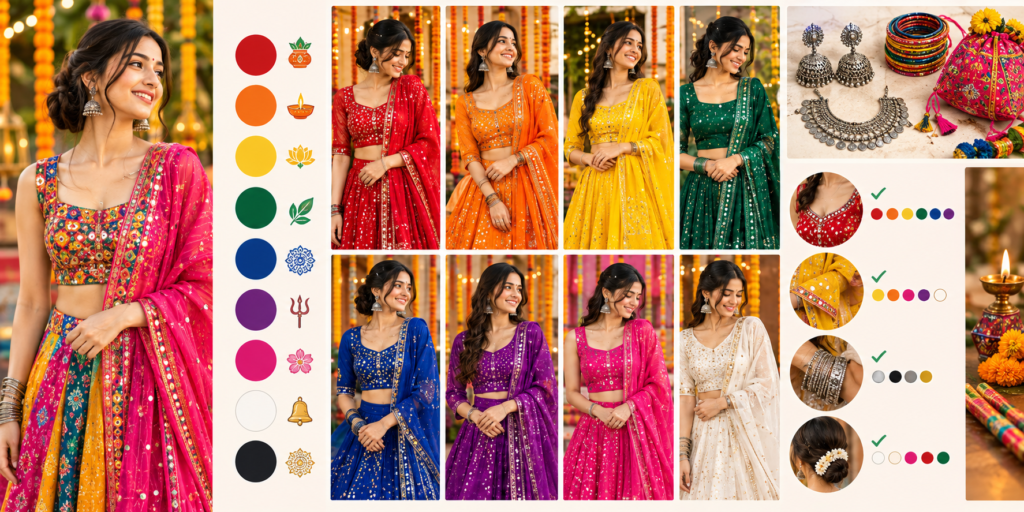
| Navratri Day | Color | Goddess Form | Easy Outfit Idea |
| Day 1 | Yellow | Shailaputri | Bright yellow cotton kurta + silver jhumkas |
| Day 2 | Green | Brahmacharini | Emerald green saree or mint-green kurta set |
| Day 3 | Grey | Chandraghanta | Grey ethnic dress + heavy oxidized silver jewelry |
| Day 4 | Orange | Kushmanda | Orange mirror-work lehenga or Bandhani dupatta |
| Day 5 | White | Skandamata | White Chikankari suit + colorful bangles |
| Day 6 | Red | Katyayani | Classic red saree or embroidered red kurta |
| Day 7 | Royal Blue | Kalaratri | Royal blue Anarkali + gold accessories |
| Day 8 | Pink | Mahagauri | Magenta lehenga or soft pink kurta |
| Day 9 | Purple | Siddhidatri | Deep purple silk saree or kurta with zari work |
How to Follow the Colors Without Buying 9 Outfits
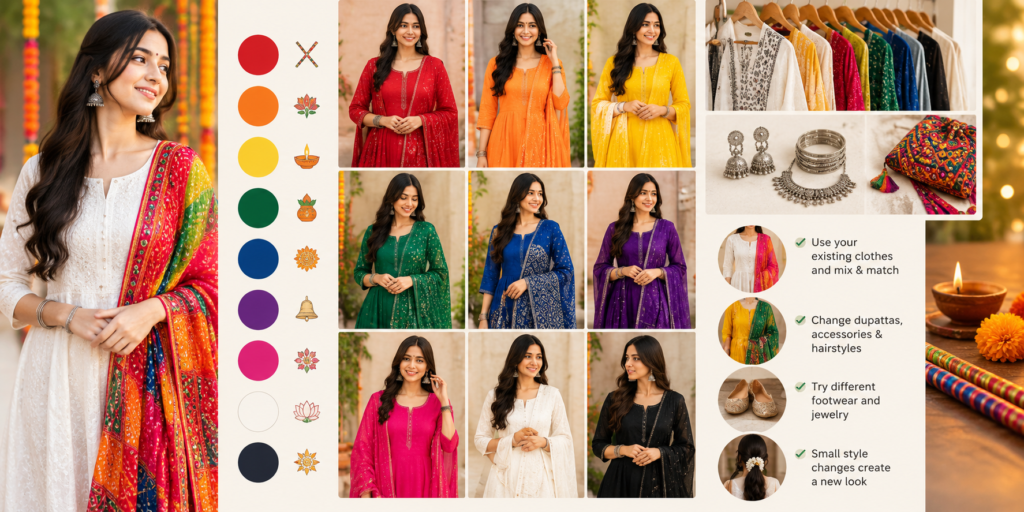
You definitely don’t need to empty your wallet to participate. Navratri Instead of buying nine full sets, try these smart shortcuts:
- Rely on Dupattas and Scarves: Keep a solid white, cream, or black kurta set as your base. Navratri Swap out the dupatta each day to hit the daily color code effortlessly.
- Use Accessories: If you don’t own a grey or purple outfit, bring the color in through your bangles, binds, footwear, or a statement necklace.
- Mix and Match: Pull items you already own out of your closet. Navratri A green skirt from one outfit paired with a yellow top from another gives you a completely fresh combination.
FAQ’S
1. What are the 9 colors of Navratri?
The commonly followed colors are yellow, green, grey, orange, white, red, royal blue, pink, and purple.
2. What is the meaning of Navratri colors?
Each color is associated with qualities such as positivity, growth, peace, strength, devotion, compassion, and spirituality.
3. Do Navratri colors change every year?
Yes. The color sequence can vary by year, region, and local tradition, so different calendars may show different lists.
4. Why do people wear different colors during Navratri?
Wearing a specific color each day is a popular cultural tradition that adds meaning, excitement, and a festive touch to the nine-day celebration.
5. Can I follow Navratri colors at home?
Yes. You can wear the day’s color, decorate your home with matching shades, create rangoli, or use colorful flowers and diyas during your celebration.